Ecological homemade washing powder: economical recipes
Precautions and advice
- Use Marseille soap for optimal cleaning.
- Baking soda removes stubborn odors from textiles.
- Save money with this healthy household solution.
For clean laundry without polluting the planet, make your own washing products. A simple method using natural ingredients to care for sensitive skin.
Homemade ecological detergent is a sustainable alternative for the healthy care of your clothes. Find out how to make this natural detergent that’s good for your health and your budget.
Why choose to make your own eco-friendly detergent?
By making your own household products, you can precisely control all the ingredients used in your home. This reduces the risk of allergies, while helping to protect our precious environment.
An ecological choice to reduce environmental impact
Industrial products contain chemicals that pollute the country’s water sources. In contrast, natural solutions preserve aquatic biodiversity with each regular wash cycle.
Your zero-waste approach limits the massive production of plastic cans that are useless for the planet. This simple gesture contributes to reducing your carbon footprint on a daily basis for a sustainable future.
A cost-effective solution for the long term
The purchase of raw materials represents a minimal initial investment for the household budget. By producing several liters of natural artisanal detergent for just a few cents, the savings are considerable.
The cost per machine is ridiculously low compared with conventional store brands. This habit transforms your monthly expenses into concrete savings for your family projects.
A healthier alternative for skin and health
Synthetic fragrances can cause skin irritation in the most vulnerable members of the family. Ecological washing powder for sensitive skin eliminates these risks thanks to its simple, additive-free composition.
You avoid exposure to endocrine disruptors hidden in the complex formulas of major industrial groups. This protection guarantees optimum comfort for your active children all day long.

Simple recipe for effective homemade ecological detergent
You don’t have to be a chemical expert to make this easy and rewarding household cleaner. With just a few basic ingredients, you’ll get quality results on stubborn stains around the house.
Essential ingredients to know
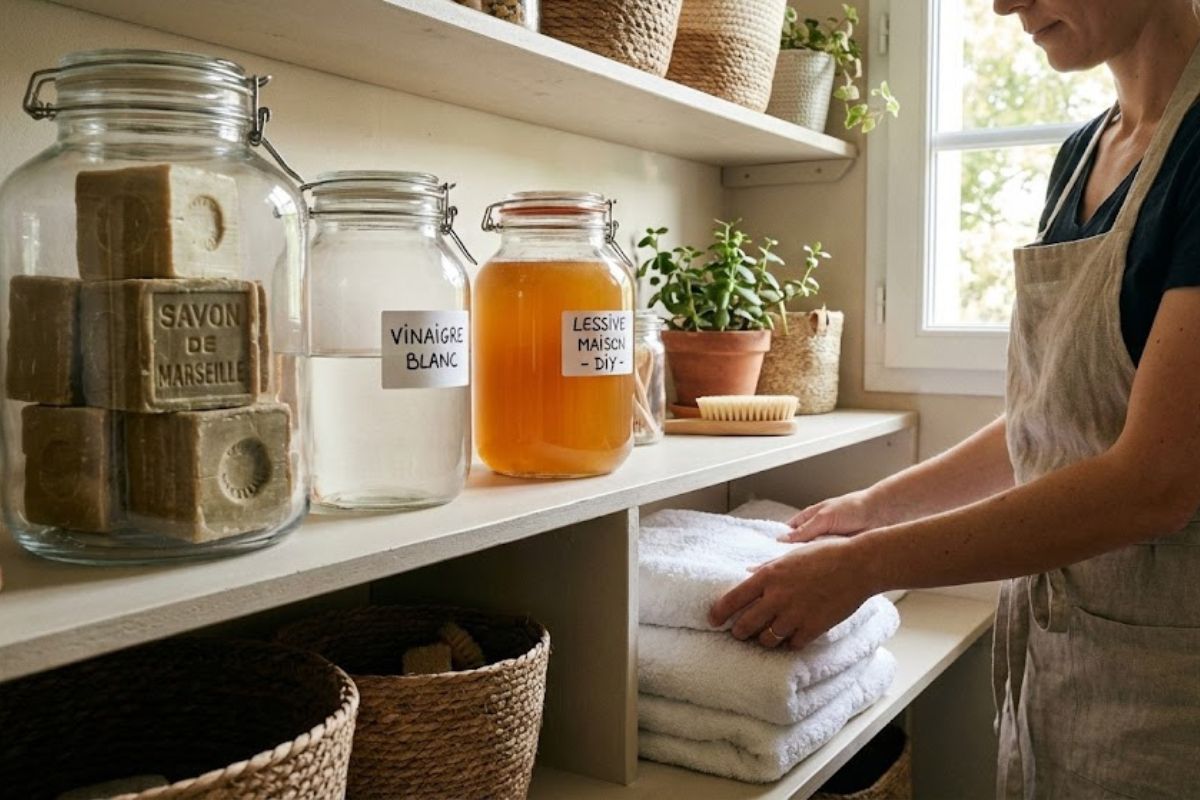
Marseille soap is the ideal solid soap for gently removing stains from delicate textiles. Choose a block free of palm oil to guarantee a composition that respects tomorrow’s ecology.
Baking sod a effectively neutralizes unpleasant odors in dirty laundry. These natural ingredients work in synergy to ensure impeccable cleanliness with every wash.
The step-by-step manufacturing process
Start by finely grating the soap, then dissolve it in a liter of boiling water. Stir the solution with a wooden spoon until the liquid is smooth and lump-free.
Allow the mixture to cool before adding the bicarbonate to preserve the active properties of the ingredients. Then pour your environmentally-friendly detergent recipe into an old, clean can for easy use.
The right dosage for optimal washing
Pour 100 ml directly into the machine drum or detergent dispenser. This is enough to treat a normal load of laundry without saturating the fibers.
Adjust the dosage according to the degree of soiling of your laundry to ensure effective cleaning. Proper dosage prevents clogging of the hoses and prolongs the freshness of your laundry.
Choose the recipe best suited to your needs
You can adapt the daily care of your home to the nature of your favorite textiles. These adjustments allow you to treat difficult stains or to respect the most fragile skins.
Homemade ecological detergent without bicarbonate
Some people prefer to avoid bicarbonate to protect very fine silk or wool fibers. The simple mixture of soap and warm water provides a gentle clean.
This minimalist blend guarantees a deep wash without altering the softness of your luxury garments. Homemade ecological detergent without bicarbonate remains a safe option for your precious wardrobe.
Homemade ecological detergent for sensitive skin
The addition of vegetable glycerin provides extra protection for skin prone to redness or itching. This ingredient softens cotton fibers, leaving a silky touch on babies’ bodies.
Use lavender essential oil sparingly to benefit from its soothing effects while you sleep. This economical handcrafted detergent takes care of your well-being without compromising on laundry cleanliness.
Ultra-degreasing homemade ecological detergent
Soda crystals reinforce the action of soap on work clothes and kitchen linen. Add a spoonful of this product to get rid of greasy stains on your kitchen aprons.
This powerful version is suitable for high-temperature washing and keeps thick fibers in perfect hygienic condition. You get professional results without using products that are harsh on your hands or the environment.
Tips to increase the efficiency of your homemade detergent
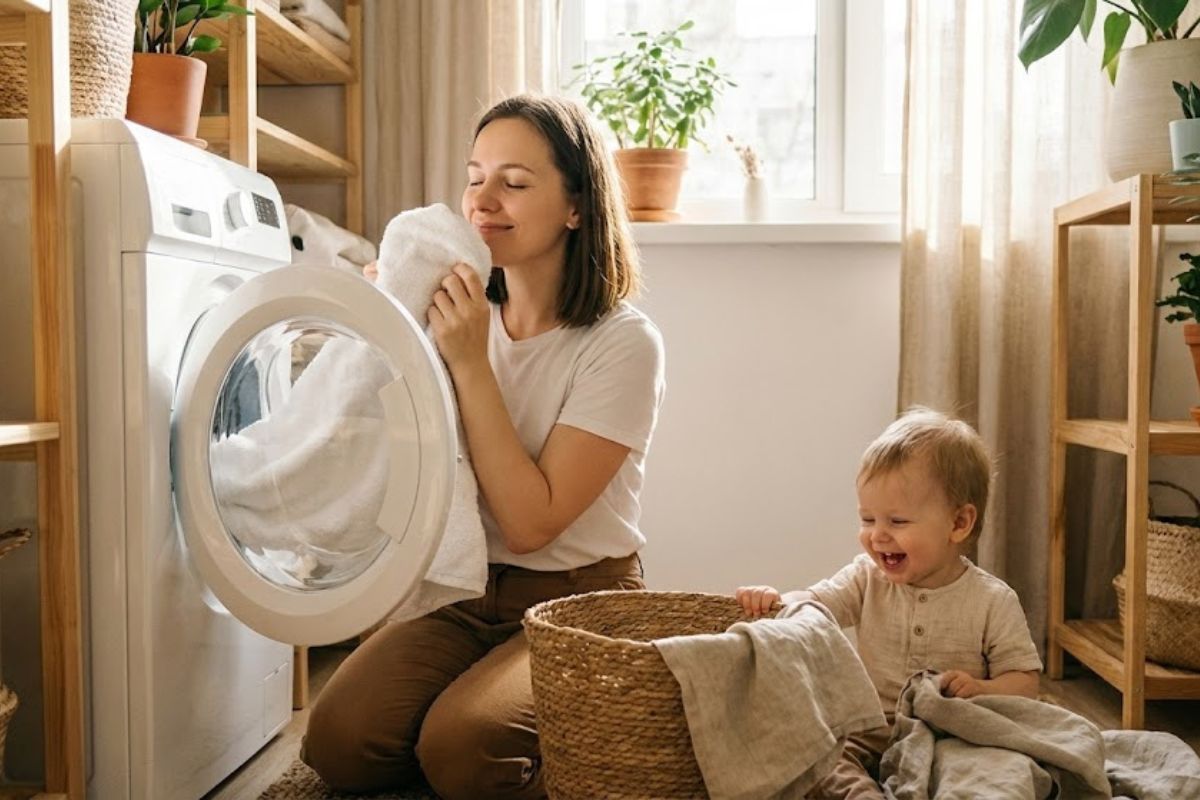
Laundry care sometimes requires external adjustments to optimize washing results. Here are a few practical tips to make your home cleaning routine a great success.
A recipe adapted to water hardness
Pouring white vinegar into the fabric softener container neutralizes limescale in the water. This technique restores softness to your sheets and towels after drying.
Soft water enhances the soap’s foaming action for effective fiber cleaning. Test the quality of your local network to dose your ingredients with logical results.
Naturally scent your eco-friendly detergent
Citrus peels in a small cotton bag give your laundry a light, fresh scent. You benefit from a pleasant scent without the risk of staining your light-colored clothes with synthetic dyes.
Rose floral water is also an elegant alternative for giving your linen an olfactory signature. These natural solutions bring a feeling of cleanliness throughout your home, while respecting your senses.
How to store your homemade detergent
Store your liquid product in a cool place, out of the summer sun. Remember to shake the can before each use to ensure that the liquid is perfectly homogenous.
Use glass containers to avoid any chemical interaction with the walls of household containers. Correctly stored, your zero-waste ecological detergent remains stable for several months.
Homemade vs. industrial ecological detergent: the real comparison
Comparing these two methods will help you make an informed decision about your household management. You’ll discover the concrete advantages of artisanal manufacturing over mass-market solutions.
Washing efficiency comparison
Homemade detergent is just as effective as conventional products on everyday stains. Simply pre-treat blood or wine stains before putting your laundry in the machine.
The absence of optical brighteners preserves the original colors of your favorite garments over time. Your clothes look like new for longer, because the fibers are not chemically attacked in the wash.
Cost per machine comparison
The cost of a machine with an industrial product is much higher than that of home preparation. By choosing this smart, sustainable home solution, you’ll make significant annual savings.
While the price of raw materials remains stable, the price of major brands continues to rise. This strategic choice protects your purchasing power while guaranteeing total cleanliness for your family.
Comparison of environmental impact
Industrial detergents release toxic phosphates that promote the proliferation of algae in our wild rivers. Your natural homemade detergent degrades without leaving harmful traces for the planet’s ecosystems.
The reduction of disposable packaging is a major argument for citizens concerned about future heritage. You’re part of a worldwide movement to protect aquatic flora and fauna.

Frequently asked questions about homemade ecological detergent
Beginners often have many legitimate questions before changing their domestic habits. We’re here to answer your questions and help you make the transition to a more responsible lifestyle.
Is this detergent suitable for all textiles?
Everyday clothes made from natural fibers such as cotton or linen are ideal. For silk or technical fabrics, hand wash with a reduced dose of product.
Always test the product on a small hidden area before washing an expensive garment. This simple precaution guarantees the longevity of your wardrobe while validating the effectiveness of your personal recipe.
Can I use this detergent in a modern washing machine?
Newer machines accept Marseille soap dissolved in water. Don’t forget to run a high-temperature vacuum cycle once a month to maintain your machine.
This removes any soap residue and prevents the development of unpleasant odors in the drum. Regular maintenance ensures that your washing machine runs smoothly and lasts longer.
What is the shelf life?
The mixture can be stored for up to 6 months without losing its washing or stain-removing properties. A change in texture does not mean that the product has expired or is harmful to your textiles.
Simply shake the mixture before filling your dispenser to achieve optimum fluidity. This stability enables you to prepare large quantities and save time in your household chores.
Things to remember before taking the plunge
Adopting natural cleaning habits positively transforms your relationship with mass consumption. You become a player in your own health, while protecting Mother Earth’s precious resources.
Start making your own products now to see the benefits for your life and your savings. Share these tips with your friends and family to spread these good practices quickly.