
Humidity-controlled CMV is a modern, intelligent ventilation system. It automatically adjusts the airflow according to the ambient humidity level detected in the room. This considerably improves indoor air quality on a daily basis.
This type of ventilation is essential to guarantee excellent thermal comfort in the home. It helps maintain a pleasant temperature all year round, whatever the season. What’s more, it effectively reduces the risk of mold on the walls.
Homeowners are often looking for solutions to optimize their overall energy consumption. Humidity-controlled CMV represents an effective answer that can be easily integrated into most existing systems. This article will guide you through the options available to discover the real benefits of this system.
What is humidity-sensitive CMV?
Humidity-controlled CMV is a particularly high-performance mechanical ventilation system. It regulates airflow according to the actual humidity in each room of the dwelling. This automated process ensures constant, healthy renewal of indoor air.
Unlike self-adjusting models, this version adjusts autonomously without human intervention. Its extract units open or close progressively according to needs detected by sensors. This allows stale air to be evacuated precisely when needed.
Here are some key features of a humidity-controlled system:
- Reduces excessivehumidity.
- Automatic adaptation of flow rates.
- Significantly enhanced living comfort.
It is particularly essential in wet rooms such as bathrooms and kitchens. Its targeted action prevents condensation on windows and water damage. Its main role is to ensure a healthy indoor climate for all occupants.
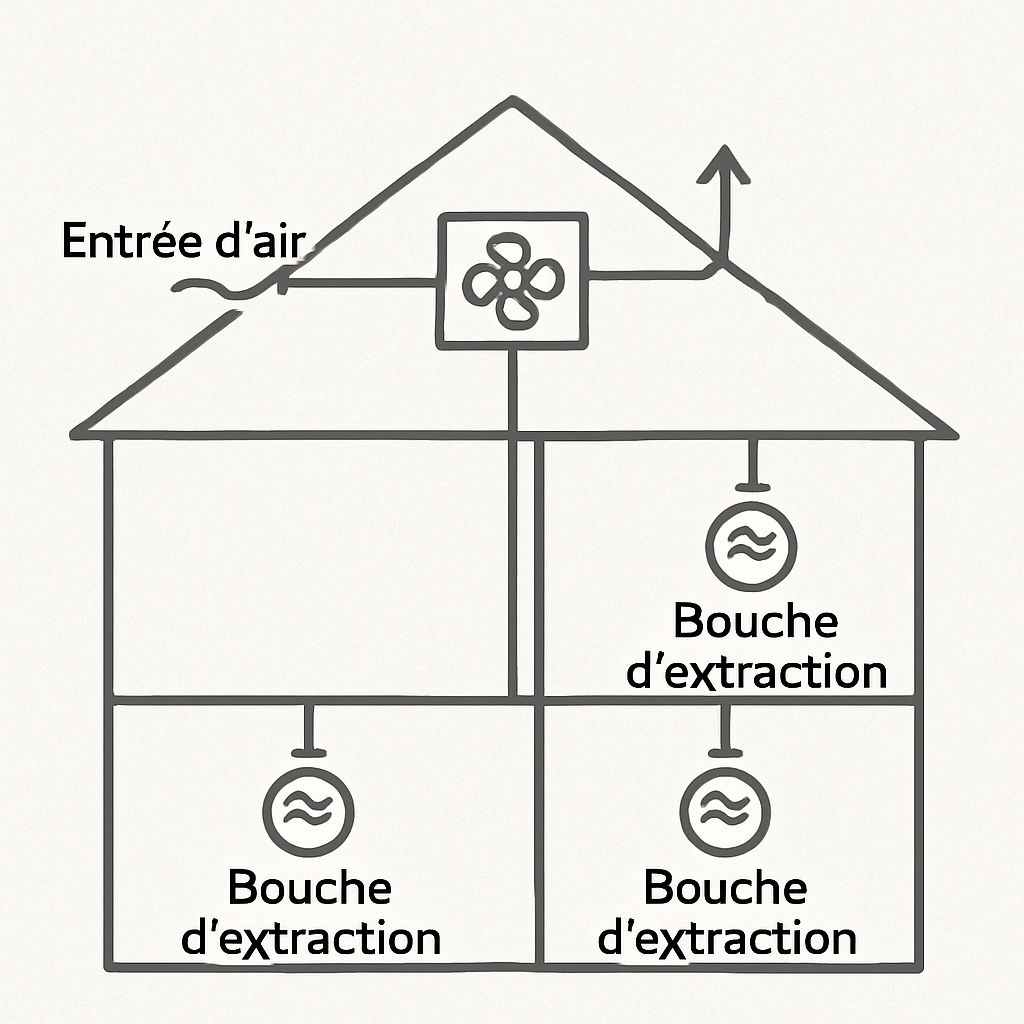
How a humidity-sensitive CMV works
The operation of this device is based on a simple but extremely effective physical principle. It adjusts its extraction rate according to the humidity level measured in real time. This guarantees optimum ventilation without any unnecessary energy loss.
Integrated humidity sensors measure water vapour in the ambient air. Based on this precise data, the air vents mechanically modify their opening. They open wider during a shower or when preparing a meal.
Here’s how it works in practice:
- Constant humiditymeasurement by sensors.
- Automatic vent damper adjustment.
- Smooth, regular renewal of polluted air.
This flexible system enables extremely fine control of the atmosphere in your home. This keeps the air clean and breathable, without the need for tedious manual adjustments. This technology translates into greater energy efficiency over the months.
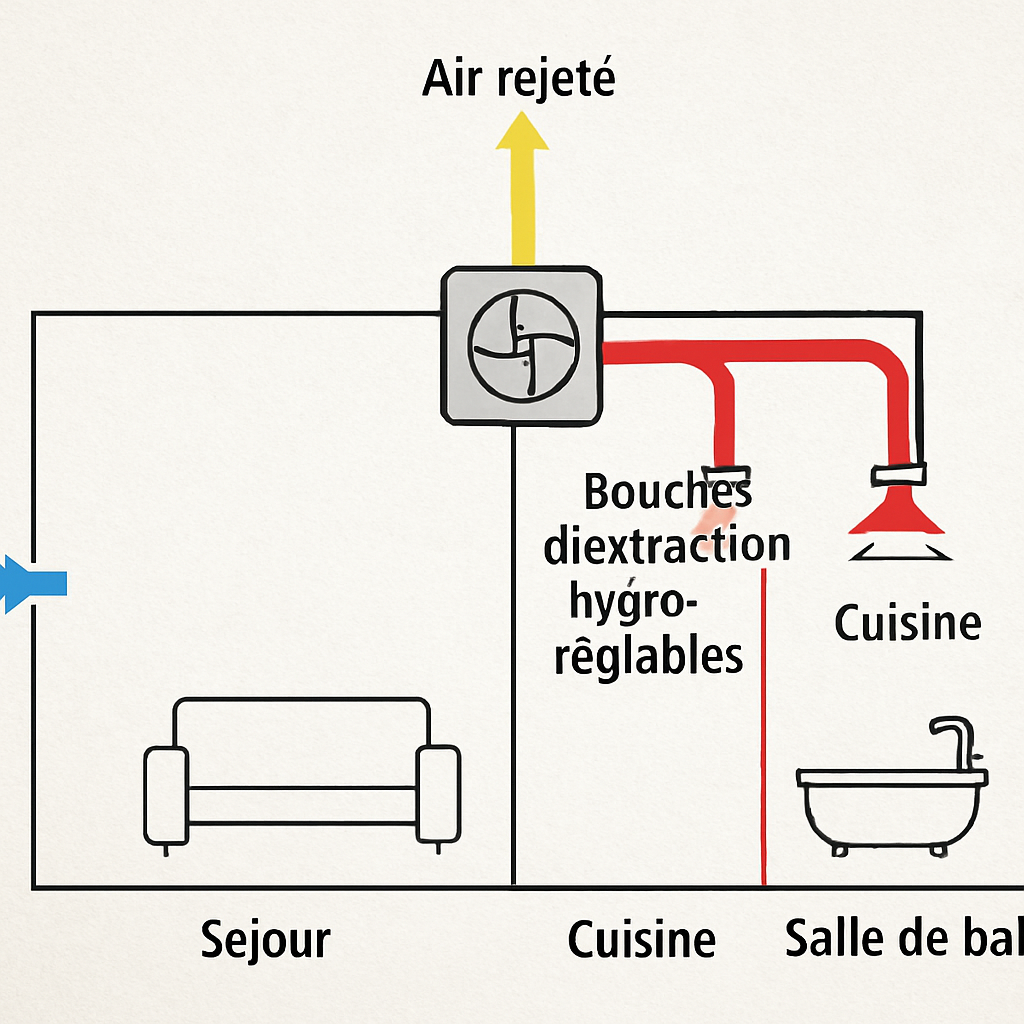
The different types : Type A and Type B
There are two main categories of models, named Type A and Type B. These two variants have similar operating modes, but different technical applications. It’s crucial to understand their specific features before making a final choice.
Type A only adjusts extract units located in damp rooms. Air inlets in living rooms remain self-regulating with a fixed airflow. This solution is often used for specific renovations.
Type B is more complete, as it regulates all the openings in the home. The extract units and air inlets are all sensitive to the ambient humidity level. This system delivers even greater energy savings over the long term.
 by Markus Spiske (https://unsplash.com/@markusspiske)
Humidity-sensitive vs. self-regulating CMV
Choosing between these two technologies can sometimes seem complex for an individual. Humidity-controlled CMV adapts to the actual humidity requirements of each room in the house. It provides precise ventilation, avoiding unnecessary cooling in winter.
In contrast, self-regulating CMV ensures a constant airflow regardless of what happens inside. It does not react to peaks in humidity, and operates in the same way day and night. This system is generally chosen for its technical simplicity and low cost.
Key points of comparison :
- Humidity-controlled: variable airflow depending on humidity.
- Self-adjusting: fixed, permanent airflow.
- Performance: Clear advantage for humidity-sensitive version.
Price and installation of a humidity-sensitive CMV
The cost of such equipment varies according to the quality of the material and the complexity of the job. Prices generally start at around 300 euros for entry-level models. For a complete, high-performance system, the price can rise to as much as 1,000 euros.
Installation must be carried out with great care to ensure smooth air circulation. The first step is to determine the strategic location of the central unit, often located in the attic. Correct installation ensures that the motor generates no significant noise pollution.
Here are a few tips for a successful installation:
- Use a qualified professional installer.
- Check that all ducts are perfectly sealed.
- Maintain filters regularly to prevent clogging.
 by Pawel Czerwinski (https://unsplash.com/@pawel_czerwinski)
Advantages of humidity-sensitive CMV for the home
Humidity-sensitive CMV is a wise choice for modern homes. It optimizes indoor air quality while reducing energy costs. This system adjusts to variations in humidity, ensuring optimum comfort for occupants.
One of the main advantages of this system is its remarkable energy efficiency. By adapting air flow rates to actual requirements, it considerably reduces thermal wastage. This translates into a visible reduction in heating and electricity bills.
In addition, humidity-sensitive CMV actively contributes to the health of residents. By adjusting ventilation, it prevents the formation of mold and the accumulation of allergens. This helps maintain a healthy, breathable environment for the whole family.
These benefits make it a particularly attractive investment. It offers a perfect balance between technical performance and ecological sustainability. It’s an ideal solution for enhancing the value of your real estate assets over the long term.
 by Brooke Cagle (https://unsplash.com/@brookecagle)
Air quality and thermal comfort: why choose this system?
Indoor air quality has a direct impact on our daily well-being. Humidity-controlled CMV plays a crucial role here, by regulating airflow. It adapts airflow to humidity levels to optimize intelligent ventilation.
This technology significantly improves thermal comfort in your home. By adjusting air circulation, it maintains a stable, even temperature. This prevents unpleasant sensations of cold or excessive heat.
Choosing this model transforms the interior into a healthy space. Reducing the risk of mold and mildew ensures a better-preserved building structure. This ensures a pleasant indoor climate all year round.
 by Noah Boyer (https://unsplash.com/@emerald_)
Humidity-sensitive CMV and energy savings
This system offers a major economic advantage through reduced consumption. By adjusting the airflow, it optimizes the overall energy use of the home. This strategic choice significantly reduces unnecessary heat loss.
It plays an active part in more efficient and responsible energy management. It’s an important step towards an eco-responsible, high-performance home. Reducing energy costs becomes a simple reality.
Price of humidity-sensitive CMV: what to expect?
The cost of installation varies according to the brand and complexity of the model chosen. Prices generally start at 300 euros and can rise to 1,000 euros. It’s essential to consider all technical aspects before finalizing your purchase.
Don’t forget to include the cost of qualified professional installation. The type of flow, single or double, will also influence the final quote. Higher quality often guarantees additional functionality and longer service life.
Installation: essential steps and tips
Installing a CMV requires careful planning to be effective. Start by choosing an optimal location to ensure smooth air flow. This ensures that the unit operates at its maximum technical capacity.
Next, install extract units in damp rooms such as kitchens. Make sure the ducts are unobstructed to facilitate circulation. Correct installation avoids condensation problems in the long term.
The final step is to fix the central unit in the attic or cellar. Remember to seal all connections to prevent any unwanted air leaks. Regular maintenance of the system is then necessary to maintain its performance.
 by Pawel Czerwinski (https://unsplash.com/@pawel_czerwinski)
Common problems and system maintenance
Certain installations can sometimes cause noise or hissing noises. A sudden noise often indicates a mechanical problem or poor fastening. Identifying the source is crucial to finding the right solution.
Regular maintenance is essential to ensure the longevity of your unit. Clean the extract units every three months to prevent clogging. Also, have the entire system checked by a professional every two years.
Care and maintenance of humidity-sensitive CMV
Regular maintenance of your humidity-sensitive CMV is essential to ensure its longevity. Proper maintenance also ensures optimum performance over the years. Finally, a well-maintained system means substantial energy savings over the long term.
Here are some practical tips for looking after your ventilation system. We recommend that you follow these steps to avoid early mechanical malfunction. Careful attention to components ensures that your home always has healthy air.
- Clean extract units every three months to prevent clogging.
- Check and replace filters once or twice a year, depending on the environment.
- Have the system checked by a qualified professional at least every two years.
Integration with other equipment: thermodynamic water heaters and connected homes
Humidity-sensitive CMVs can be easily integrated with other innovative home technologies. This is particularly true of thermodynamic water heaters, which can recover heat from extracted air. This intelligent combination maximizes thermal comfort while protecting occupants’ health.
Here are the major benefits of this technical integration for your home:
- Significantlyoptimizes overall energyconsumption.
- Improves thermalcomfort by stabilizing interior temperature.
- Contributes to a much healthier and purer indoorenvironment.
What’s more, recent models can be integrated directly into a connected home system. This allows you to control and monitor your ventilation remotely via a dedicated application.Home automation integration can thus significantly improve your quality of life and daily comfort.
How to choose the right humidity-sensitive CMV?
Choosing the right ventilation depends on several key factors linked to the configuration of your home. It’s essential to take into account the specifics of your home, as well as your actual needs. A precise analysis of your environment will enable you to opt for the most efficient and appropriate model.
Here are the main selection criteria to consider before making your purchase:
- Total surface area of your home to correctly size the motor.
- Acceptablenoise level to ensure quietness in living areas.
- Available budget including cost of materials and installation.
Don’t forget to analyze the options available in terms of advanced features and guarantees. A humidity-sensitive CMV must be perfectly suited to your current lifestyle. And make sure it’s easy to maintain, to simplify management over the long term.
Conclusion: a sustainable choice
Humidity-sensitive CMV significantly improves the quality of life in the home. It optimizes air purity while protecting the very structure of the building. It’s a smart investment for anyone wishing to combine health and savings.
By installing this device, you create a much healthier and more pleasant indoor environment. Automatic regulation ensures that the air you breathe is always fresh, without wasting heating energy. It’s a sustainable solution that adds long-term value to your property.